Visitor Rules & Guidelines
When you cross the cattle grid into the Central Kalahari Game Reserve, the illusion of modern control vanishes within minutes. This is one of the largest protected desert spaces on Earth, stretching across 52,800 square kilometres of red sand, scrub acacia, and ancient dry river valleys. Out here, rules are not bureaucratic nuisances designed to spoil your holiday. They are the fragile boundaries that keep visitors alive and preserve an ecosystem where humans remain brief, temporary guests.
Understanding the DWNP Regulatory Framework
The reserve operates under the direct jurisdiction of the Department of Wildlife and National Parks (DWNP), a division of Botswana’s Ministry of Environment and Tourism. Botswana enforces a strict low-volume, high-value tourism policy across all state lands. In practice, this means strict caps on campsite entries, zero tolerance for off-track driving, and absolute self-sufficiency mandates for travellers entering the reserve.
Unlike commercial game parks in South Africa or Kenya, the Central Kalahari has no bitumen roads, no fuel stations, no shops, and no running water at public campsites. The DWNP framework holds every vehicle commander personally responsible for their own safety, waste disposal, and recovery gear. If you break down or run out of water deep in Passarge Valley, official help could take days to reach you.
Central Kalahari Game Reserve Entrance Fee Breakdown
All visitors must pay daily conservation and vehicle fees to enter the reserve. These fees apply per calendar day, not per 24-hour period. If you enter at 15:00 on Monday and leave at 09:00 on Tuesday, you must pay for two full days. Below is the official fee schedule maintained by the Department of Wildlife and National Parks under Category B park regulations.
| Visitor Category | Daily Park Fee (BWP) | Daily Vehicle Fee (BWP) |
|---|---|---|
| International Non-Residents | BWP 380 | BWP 75 |
| SADC Residents | BWP 200 | BWP 75 |
| Botswana Citizens / Residents | BWP 50 | BWP 75 |
| Children (Under 8 Years) | Free | N/A |
Park entrance fees must be settled before you arrive at the entrance gate. While gate attendants at Matswere Gate can occasionally process cash payments in Botswana Pula, network connections frequently fail. Arriving at the gate without pre-paid entry vouchers or confirmed campsite receipts risks total entry refusal.
The Campsite Allocation Split: DWNP vs. Private Operators
Campsite management inside the Central Kalahari is split between government-administered sites and privately run concessions. You cannot pitch a tent wherever you choose. Wild camping outside designated sites is illegal and carries severe penalties, including immediate expulsion from Botswana’s national parks.
DWNP Managed Campsites
The government manages public grounds located primarily in the northern and western sectors. Booking must be made through DWNP central offices in Maun or Gaborone.
- Deception Valley (CK-DEC-01 to 03)
- Kori Campsites (CK-KOR-01 to 04)
- Leopard Pan (CK-LEO-01)
- Phokoje Pan (CK-PHO-01)
- Xade Campsites (CK-XAD-01 to 02)
- Bape & Xaka Campsites
Privately Managed Sites
Private operators manage several key pan campsites. These require separate booking invoices, which must then be cleared and registered with DWNP for park entry permits.
- Passarge Pan (Sites 01 to 03)
- Sunday Pan (Sites 01 to 02)
- Lekhubu Pan & Letiahau
- Piper Pan (Sites 01 to 02)
- Motopi Pan (Sites 01 to 03)
Field Note: Always double-check your site vouchers against your vehicle entry dates. If you book private operator sites like Sunday Pan through Bigfoot Tours, you must present that invoice to DWNP to issue your final park entry permit. Gate wardens will check both paperwork sets before lifting the boom.
How to Secure DWNP Permits and Campsite Vouchers
Securing permits requires patience. Botswana’s reservation system is deliberately un-automated to control visitor numbers. To secure your spot, follow this sequence:
- Determine your route and campsite locations using our detailed Maps & Navigation Resources.
- Contact the private operators first if your itinerary includes Passarge, Sunday, or Piper Pans. Pay their accommodation deposit to secure your campsite voucher.
- Submit your DWNP application with private vouchers attached to the DWNP reservation offices in Maun or Gaborone via email or in person.
- Pay your daily central kalahari game reserve entrance fee directly to DWNP upon voucher confirmation.
- Print three physical copies of all DWNP permits, payment receipts, and campsite vouchers. Digital copies on mobile phones are not accepted at remote gates where battery charging or screen viewing can fail.
If you prefer an organized itinerary without the complex administrative coordination, you can review guided options through our Tickets & Safari Options page.
Gate Protocols and Paperwork Requirements
The reserve has four principal access gates: Matswere Gate (north-east, most common for Deception Valley), Xade Gate (west), Tsau Gate (north-west), and Piper Pan Gate (south). Every driver must adhere to strict entry rules.
Gate Operating Hours
Gates open at 06:00 in summer (October to March) and 06:30 in winter (April to September). Gates close strictly at 18:30 in summer and 18:00 in winter. Driving after dark is prohibited throughout the reserve.
Plan your driving times carefully. The thick sand tracks slow average speeds to 20 km/h. Arriving at a gate after hours results in heavy fines and mandatory overnight waiting at the gate holding area.
Required Gate Documents
When you present your vehicle at the entry gate, the lead driver must produce specific physical paperwork to the duty warden:
- Valid passports for all vehicle occupants
- Printed DWNP entry permit showing paid park fees
- Printed campsite confirmation vouchers matching your stay duration
- Vehicle registration papers or cross-border rental authorization letters
- Completed gate register detailing fuel carried and emergency contacts
Off-Grid Self-Sufficiency Mandates
The Central Kalahari is unforgiving. Once you leave the gate, there is no food, water, or mechanical support available. The DWNP requires all self-drive teams to carry mandatory minimum supplies before granting park entry.
You must carry a minimum of 5 litres of drinking water per person per day, plus an additional 20 litres of emergency water per vehicle. Washing water must be calculated separately. In the heat of October, daily consumption easily doubles. Make sure to review our guide on When to Visit & Seasonal Weather Trends to calculate your seasonal water needs properly.
Fuel planning requires equal discipline. Deep sand significantly increases fuel consumption. A heavy four-wheel-drive vehicle that uses 12 litres per 100 km on tarmac will burn 22 to 28 litres per 100 km in Kalahari sand. Calculate your total itinerary distance, add 50 percent as a safety margin, and carry the extra fuel in approved steel jerry cans or long-range tanks. For technical vehicle prep advice, read our post on Navigating the Deep Sands: 4×4 Safety Tips.
Waste Management and Desert Leave-No-Trace Ethics
The Kalahari ecosystem relies on dry decomposition, which takes years to process organic material. A single piece of improperly buried rubbish can persist for decades. The rule in the reserve is simple: whatever you bring in, you carry out. You can review the details on our Accommodation & Campsite Guide to check facility availability at each specific site.
All waste plastic, tins, glass, and leftover food must be stored in heavy-duty canvas bags secured inside or on top of your vehicle. Do not tie trash bags to the outside bumper where hyenas can rip them open at night. Fire pits at wilderness campsites are for wood fires only. Burning plastic or food scraps creates toxic residue and attracts scavengers to campsites.
Never bury rubbish in the sand. Hyenas and honey badgers dig up buried food scraps within hours, swallowing plastic bags and metal cans that cause slow, painful internal injuries.
Wildlife Interaction Codes and Safety Standards
Campsites in the Central Kalahari are completely unfenced. Lions, leopards, spotted hyenas, and honey badgers move freely through camping areas. Maintaining personal safety relies on disciplined human behavior rather than physical barriers.
- Never walk away from your campsite after dark. Always use a headlamp and check your surroundings before stepping out of your tent or vehicle shelter.
- Store all food, cooking utensils, and coolboxes inside your vehicle or hard-shell trailer. Honey badgers can open standard plastic cooler latches with ease.
- Never feed any animal, including jackals and birds. Habituation leads to dangerous aggression, which ultimately results in rangers euthanizing the animal.
- Maintain a minimum distance of 30 metres from large predators when viewing game from a vehicle. Never engine-rev or crowd animals at waterholes.
- Keep tents zipped completely closed at all times to prevent snakes, scorpions, and spiders from seeking refuge inside.
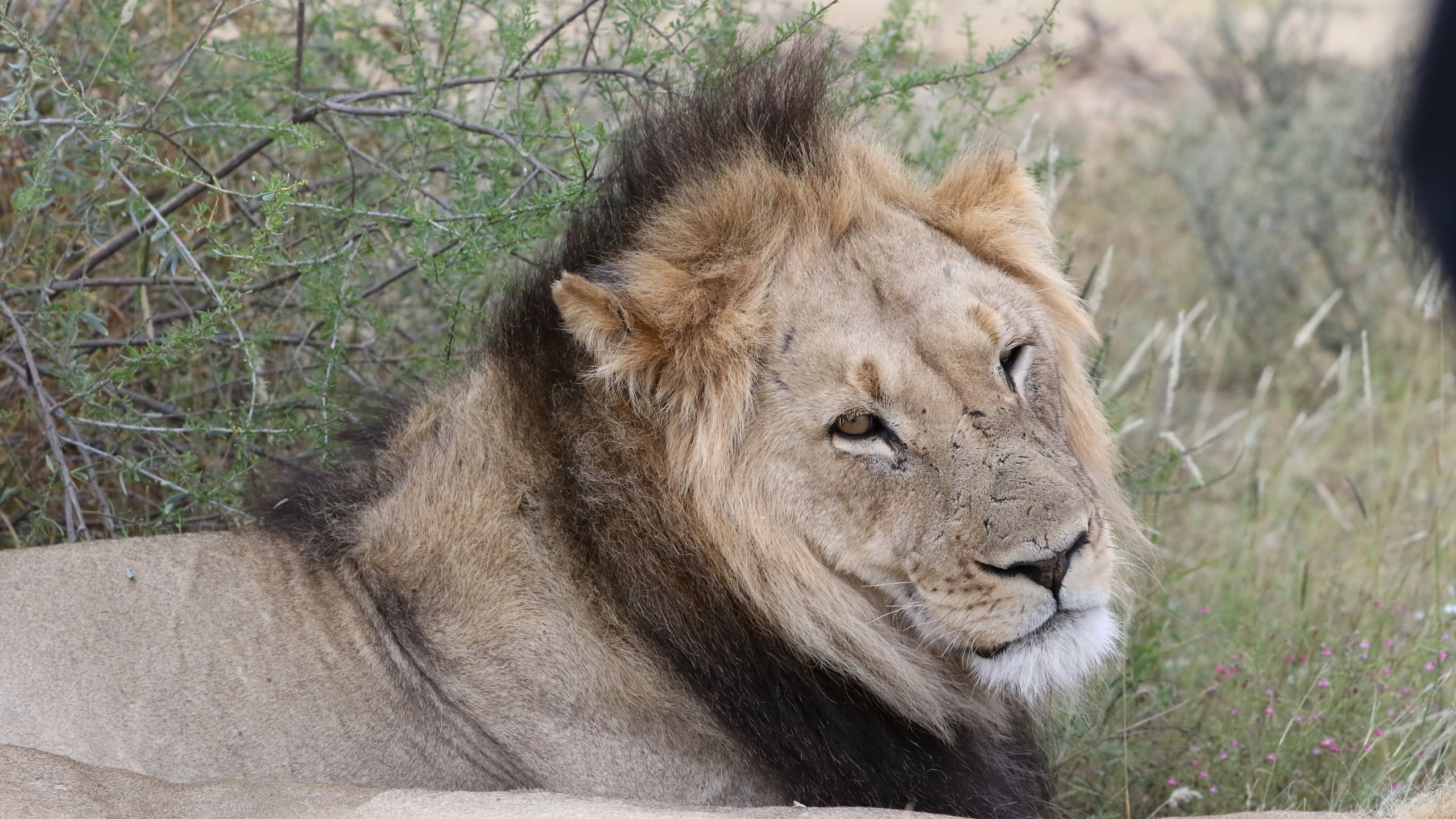
The reserve is famous for its legendary black-maned Kalahari lions. While these animals are habituated to vehicles, they view a person standing outside a car as potential prey or a direct threat. Never stand up on your roof rack or lean far out of vehicle windows when predators are near.
Drone Regulations, Photography, and San Cultural Heritage
The use of recreational drones (unmanned aerial vehicles) is strictly illegal in all national parks and game reserves in Botswana under Civil Aviation Authority regulations. Flying a drone without commercial permits and explicit DWNP permission will result in immediate equipment confiscation, heavy court fines, or arrest at the gate.
Photography for personal use is unrestricted, but commercial filmmakers and professional photographers must hold valid commercial filming permits issued by the Ministry of Environment and Tourism. Respect the indigenous San communities living in peripheral areas like Xade and New Xade. Always request permission before taking photos of local residents, and never offer money or sweets to children. You can read more about cultural ethics in our guide on Meeting the San: Ancient Heritage of the Kalahari.
Vehicle Standards and Track Etiquette
Driving off established two-track paths damages the fragile desert soil crust, which takes decades to recover. Driving on dry pan surfaces during or after rainfall leaves deep ruts that ruin the landscape permanently and trap vehicles in clay subsoil. If a pan track is wet or muddy, turn back immediately.
Track Right-of-Way Rules
On narrow single-lane sand tracks, the vehicle driving uphill or exiting deeper sand has right-of-way. The vehicle nearest to a wider passing loop should pull aside safely, keeping tires on the firmest available ground without knocking down scrub bushes.
Tyre Pressure Management
Deflate your tyres to between 1.2 and 1.5 bar (17–21 psi) upon entering sand tracks. Proper tire deflation widens your contact patch, reducing engine strain, preventing track corrugated washboards, and saving fuel.
Official Contact Channels and Booking Offices
When planning your trip, contact the official Department of Wildlife and National Parks offices directly or consult the Botswana Tourism Organisation for updated travel advisories. Ensure you have the right central kalahari game reserve contact details before finalizing your itinerary.
Gaborone DWNP Headquarters
Address: Plot 50380 Moedi House, Fairgrounds, Gaborone
Telephone: (+267) 3971405 / (+267) 3180774
Fax: (+267) 3180775
Email: [email protected]
Maun DWNP Reservations Office
Address: Sir Seretse Khama Road (next to Maun Police Station), P.O. Box 20364, Maun
Telephone: (+267) 6860368 / (+267) 6861265
Fax: (+267) 6861264
Email: [email protected]
DWNP Office Working Hours:
Monday to Saturday: 07:30 to 12:45 and 13:45 to 16:30.
Sundays: 07:30 to 12:00.
Offices are open on public holidays except Christmas Day.
Understanding these rules ensures your journey into the Central Kalahari is both safe and respectful. This vast desert space rewards self-reliant travellers who prepare thoroughly, respect the wildlife, and honour the solitude of one of Africa’s last true wildernesses. For practical driving routes and gate directions, refer to our complete guide on How to Get to Central Kalahari Game Reserve, or return to our Central Kalahari Overview Hub to plan the rest of your expedition.